Superman II 2.8: Orange You Glad

Okay, orange juice.

I mean, if you need a scene where Clark and Lois chatter for a minute so that the audience understands their relationship — and yes, this is the correct moment for a scene like that — then they have to chatter about something, and it might as well be orange juice.

It’s 1981, and the current fads in the United States include the Scarsdale Diet, the Beverly Hills Diet and the Grapefruit Diet, so given the need to generate some low-friction conversation filler, it’s natural that David and Leslie Newman would choose Vitamin C as the fashionable topic under discussion. There were other options, of course — Rubik’s Cube, Pac-Man, the Mount St. Helens eruption — but making Lois obsessed with fad diets helps to signal her acceptance of traditional gender roles, which I guess is what they wanted.

No, the really surprising thing about this sequence is the way that Lois has apparently set the land speed record for messing up her shitty little office.

Continue reading Superman II 2.8: Orange You Glad

Superman II 2.7: To Get to the Other Side

Let us speak, then, of comedy.

When people talk about the difference between Richard Donner’s work on Superman: The Movie and Richard Lester’s work on Superman II, they often say that Lester was a comedy director, and that he turned Superman II into a comedy. There’s some truth to that — there is a different sensibility between the two directors — but it’s not the difference between serious and comic. It’s the difference between two different kinds of comedy.

Donner’s comedy was mostly verbal. Basically, as soon as the film sets foot in Metropolis, everyone starts wisecracking and never stops. Everyone at the Daily Planet is funny, all of the villains are funny, the big scene between Superman and Lois is a romantic comedy sequence. Everybody talks fast, and they talk a lot.

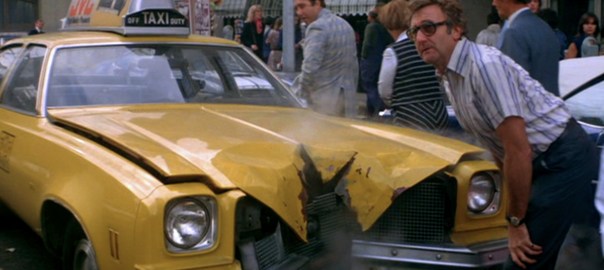
Lester’s comedy is more visual than verbal, and the best example that I have is the scene that just happens to be coming up right now, when Superman crosses the road and causes a traffic accident. In many ways, this scene embodies Lester’s approach to the film, and the fact that it sucks does not bode well for the future of the franchise.

Continue reading Superman II 2.7: To Get to the Other Side

Superman II 2.6: Gone Out the Window

And then she goes ahead and throws herself out of the goddamn window just to prove a point, and that is what I love about specifically Richard Donner’s version of specifically Margot Kidder as Lois Lane.

At the end of last week, I told you about the Donner Cut, a 2006 effort to reclaim the Superman II footage that Richard Donner shot during the production of the first movie. He’d finished about 80% of the film before the Salkinds fired him, and while some of that footage remains in the theatrical cut, there was a lot that was reshot by the new director, so the Donner Cut assembles the material in an approximation of what the film could have been like, if he’d completed it.

For the most part, it’s not that different from the theatrical release, unless you watch them side by side. There are only three scenes in the Donner Cut that I think are really essential to understanding the development of the film: the beginning, the ending, and the honeymoon hotel discovery sequence. Not coincidentally, all of them are about Lois.

Continue reading Superman II 2.6: Gone Out the Window

Superman II 2.5: The Donner Party

Or, there’s the option where Lois is smart and figures things out right away, which I personally prefer.

In this version of Superman II, the action begins on the day after the previous movie ended. Yesterday, Superman saved the West Coast and put Lex Luthor in jail, and now the main characters in the Daily Planet newsroom are all busily congratulating each other on how well they covered the story.

And then Lois, sitting at her desk, suddenly realizes the obvious truth: that Clark Kent is Superman.

Continue reading Superman II 2.5: The Donner Party

Superman II 2.4: Fight the Tower

Well, speaking of foreign distribution rights, here’s girl reporter Lois Lane let loose in a foreign country, and she’s about to be distributed widely across a sizeable stretch of western Europe, if the hydrogen bomb she’s inadvertently strapped to her back hits the pavement at the base of the Eiffel Tower.

The bomb — if it actually is a bomb — has been assembled by a group of inconclusive terrorists demanding nothing in particular from probably the government of France. The terrorists take the elevator up to the top of the tower, where they have the bomb (if it is a bomb) primed to explode in sixty seconds, which they don’t want to do, while the police use their own explosives to set off the bomb, which they don’t want to do either.

Continue reading Superman II 2.4: Fight the Tower

Superman II 2.3: Let’s Twist Again

Well, here we go again. We’re back on Krypton, which I’d figured was pretty conclusively in the rearview mirror.

But it’s here, on the cusp of this new dawn, that we find out what the three Kryptonians did to deserve being locked up in a revolving parallelogram, and set adrift in the void. At the beginning of the last movie, all we saw was the sentencing; we didn’t see the actual crime that they committed.

Well, now we know. They broke a crystal!

Continue reading Superman II 2.3: Let’s Twist Again

Superman II 2.2: It Wasn’t Ilya’s Fault

“I think it’s been a little bit overanalyzed,” says Ilya Salkind, “because, really, a lot of the decisions were pretty logical and common sense. I want to clarify a little bit, because it’s much simpler than all of the things that have been said. I mean, Richard Donner did a fantastic first film, as we all know, and it was a tremendous success, and what happened after was really, I would say, normal film history. Things happened.”

Okay, great, so that’s all cleared up. It was normal film history! I don’t know why I didn’t think of that.

Continue reading Superman II 2.2: It Wasn’t Ilya’s Fault

Superman II 2.1: Things That Richard Donner Probably Shouldn’t Have Said

So here’s how to torpedo your own film in six words, courtesy of Army Archerd’s Hollywood gossip colum in Variety:

Producer Pierre Spengler allows that he and Superman director Dick Donner differed during filming, but he says all’s now well, and Spengler expects to return to complete Superman II. Donner, however, declares, “If he’s on it — I’m not.

It’s late December 1978, and Superman: The Movie has just opened in theaters to, if you’ll pardon the expression, boffo box office. Everybody who worked on the film is feeling that Christmas spirit — except for Richard Donner, who fucking hates Pierre Spengler, and is not shy about letting people know his truth.

Continue reading Superman II 2.1: Things That Richard Donner Probably Shouldn’t Have Said

Superman 1.100: One Hundred and Thirty-Four Million Dollars

Okay, let’s get into the money, because that’s the only thing that matters.

Superman: The Movie made 7 million dollars in its opening weekend in December 1978, and it was the #1 box office draw for 11 weeks, all the way into early March ’79. The total domestic box office was $134 million, making it the highest-grossing film of 1979.

To give you a sense of scale, there were only seven movies in the 1970s that grossed more than $100 million, and Superman was in the top five: Star Wars ($307m), Jaws ($260m), Grease ($160m), Animal House ($141m) and Superman ($134m), followed by Close Encounters of the Third Kind ($116m) and Kramer vs. Kramer ($106m).

So, yeah, it was a big hit, and a big deal. So, the question is: why didn’t they make any other superhero movies for basically a decade?

Continue reading Superman 1.100: One Hundred and Thirty-Four Million Dollars